As the only global TV presenter living with Tourette syndrome, Aidy Smith is using his platform to dismantle myths, challenge corporate gatekeeping, and prove that personal power is often forged in the fires of adversity.
In an industry often defined by polish and perfection, Aidy has rewritten the script. At the Pride Wide Create Hope event at Samsung KX in London, Pride Wide co-founder Tris Reid-Smith sat down with Aidy to discuss his journey from being “canceled” at age seven to producing his own hit series on Amazon Prime.
It’s a proud achievement for the gay broadcaster, journalist and inclusivity spokesman who specialises in wine, food, lifestyle and LGBTQIA+ and neurodiversity topics.
Redefining the tic
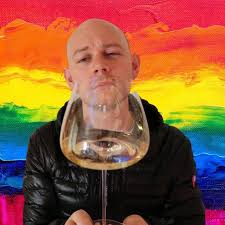
Tris: You’re the only global TV presenter with Tourette’s. I want to get into how that happened, but first, there are so many myths and misunderstandings. Could you demystify what Tourette’s actually is for us?
Aidy: Absolutely. Tourette syndrome is a neurological condition that presents itself in what we call “tics.” These can be vocal, like a noise, or motor, which is a movement. A vocal tic could be anything from a sniff or a cough to a scream, a specific word, or even a swear word. Motor tics range from jerking your eyes or rolling them to moving your limbs.
One of the major misconceptions is that it’s purely a “swearing condition.” Now, I swear all the fucking time, but it’s got nothing to do with my Tourette’s—I’m just from Yorkshire and have a foul mouth! In reality, 90% of people with Tourette Syndrome do not swear. Yet, we are all put into this box as if we do.
Don’t let other people’s perceptions stop you
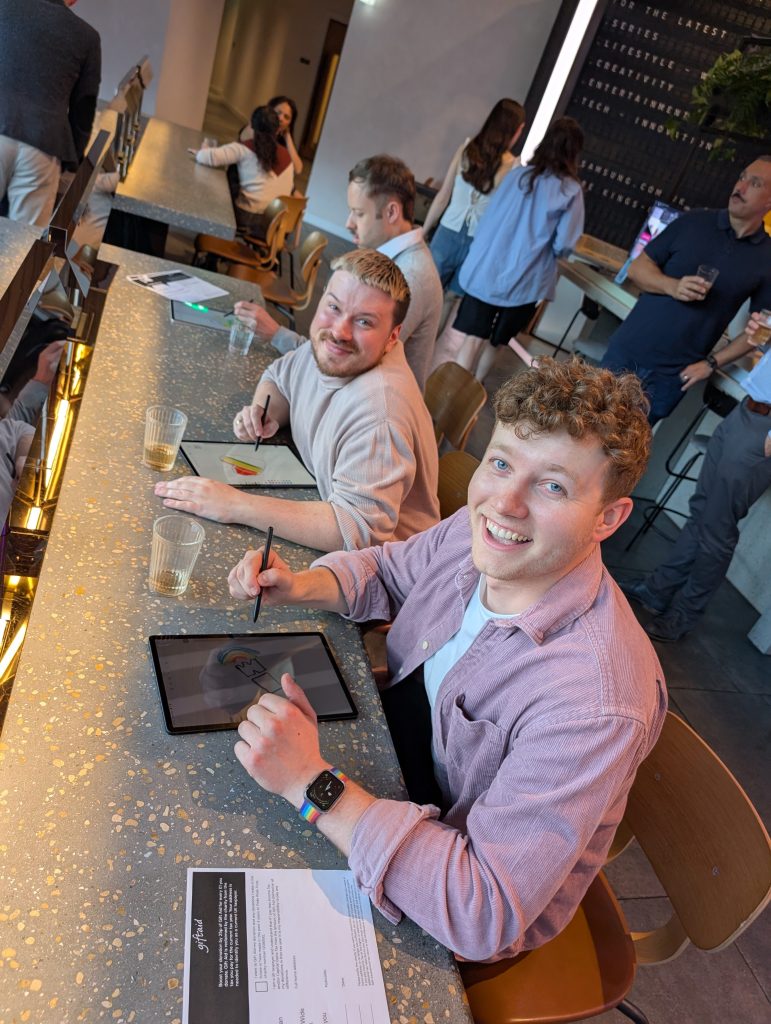
Aidy: When you look at the statistics, it’s harrowing. Fifty percent of people with Tourette’s never get a diagnosis because they are terrified that opportunities will be taken away from them. Half of the people with this condition never go into higher education or get a job because they are petrified of being bullied. And seventy percent do get bullied.
One of the most hollowing statistics I face in my advocacy work is that 48% of us at some point in our lives consider ending our lives because of what we go through. That isn’t far off the trans rate, which I believe is around 40%. It’s difficult. Growing up, there is a hell of a lot of bullying, but we can’t let other people’s perceptions get in the way of what we want to do. Fuck that. We get up, we move forward, and we achieve what we want.
You become this “freak”
Tris: You became a TV presenter because you made it happen. Tell us that story.
Aidy: It goes back to when I was five years old. I was a child actor with a series on ITV. Things were happening; I was happy, I loved life. Then, at seven, I started developing tics. I’d make this “whoop” noise, or I’d throw my head back so hard it gave me whiplash.
As soon as those tics developed, I was basically canceled. My agent dropped me, the acting school dropped me, and the TV show dropped me. I went from being a little boy who loved his life to being made to feel like I shouldn’t exist. Parents wouldn’t let me come to their houses; my friends disappeared. You become this “freak” that no one wants to be around.
That was my life for years. When I said I wanted to go to university, I was laughed at. But I got there. When I said I wanted to work in America, I was told to “be realistic” because of my disability. So, I sent 6,000 emails and I got that job. I went to San Francisco, where I eventually came out.
“I’ll make my own show”
Aidy: In 2016, my best friend JP passed away. I vouched to carry on his mission to do good, and I realized I had to reach into the very thing I had despised about myself: my Tourette’s. I decided to be an advocate and turn it around to empower people.
I’d always wanted to get back on TV, but commissioners won’t touch people with Tourette’s with a barge pole because they think they’ll have to re-edit or re-shoot scenes. When no one would give me a chance, I thought, “I’ll make my own show.”
Through branded content, raising my own funds, and producing it myself, I created my own door rather than waiting for a key to someone else’s. Now, I have a series on Amazon Prime, three seasons in, across 30 countries and 100 territories.
The point is: never let other people’s thoughts and beliefs hold you back. You will find a way. It will be your way, and it will be unique to you, but never let their perceptions affect what you want to achieve.
Tourette’s resources and Pride Wide
Aidy Smith’s story is a reminder that hope isn’t found in the absence of struggle, but in the refusal to let that struggle define the limit of one’s potential. That’s why we’re delighted to have him as a Pride Wide Ambassador.
You can find out more about Tourette syndrome access resources at Tourette’s Action.
To join Aidy in supporting Pride Wide’s stories of resilience and advocacy, sign up here.