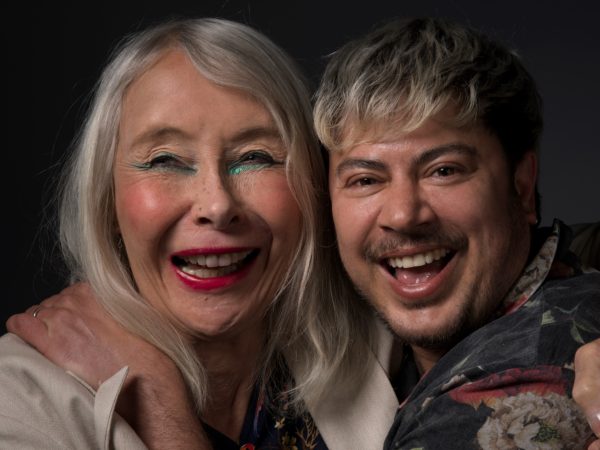
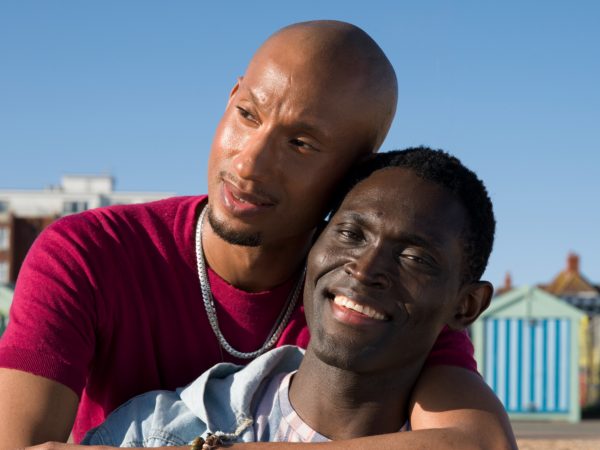
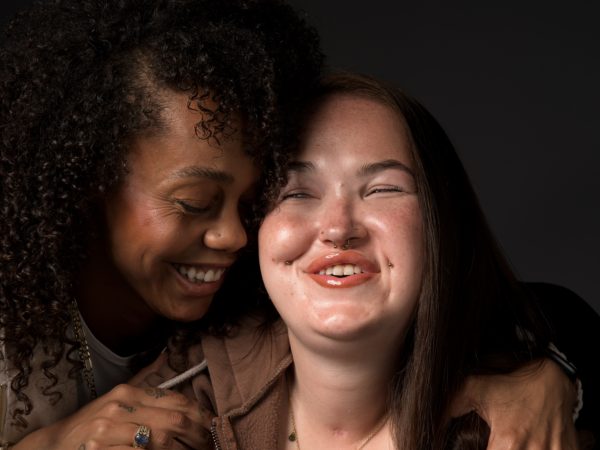
Late in 2025, Pride Wide took a single word to the creative marketing brains at Café agency – “friends”.
At a time of increasing polarization and hatred towards LGBTQIA+ people, we saw that friendship is a solution.
Research shows that even people who have previously been hostile to LGBTQIA+ people are more receptive if a friend comes out. In other words, when people see the humans behind the hysteria and the headlines, they see the truth. Friendship opens minds and changes hearts.
With so many people struggling to understand our community and so many voices telling lies against us, how do we use this idea to cut through?
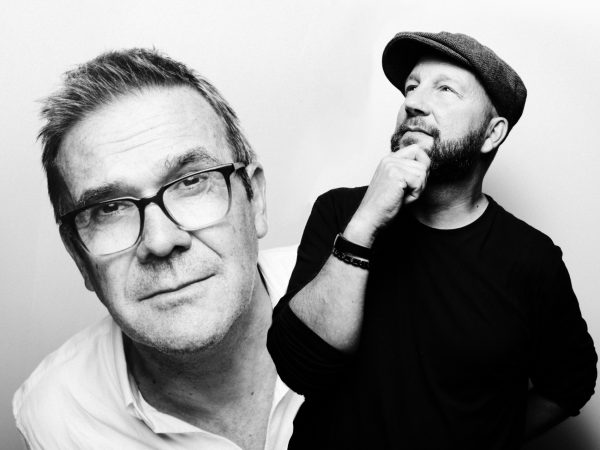
It was a big challenge but Café’s Bob Boxer and Paul Waddup were the pair to take it on.
And now, thanks to JCDecaux and Outernet, millions of people will see the campaign they helped us create in London and around the UK in June. It’s a first step in showing how Pride Wide can change hearts and minds at scale.
On the day of the big photoshoot for Live Pride Wide Open, they took a breath to discuss how they came up with their big idea.
“The insight of friendship is so powerful”
Tris: You have given us a huge amount of highly professional work for free. So why did you agree to take on the campaign brief we provided?
Bob: We saw the way LGBTQIA+ people are being treated in society and saw liberties and freedoms slipping away and I think that was what really attracted us to this.
Paul: The insight of friendship is so powerful. As friends, whether we are in the community or not, it’s about openness, acceptance and tolerance. The world is getting darker. Friendship is a really rich insight for us, so the whole idea of openness came to us.
We put the Pride Wide brand front and center. But the idea of living openly comes straight from friendship.
Bob: We often will get creative briefs from clients which are intellectually interesting and challenging. I think great things about the Pride Wide brief was, it was intellectually and emotionally such an opportunity. That’s when the magic comes.
Paul: I also think the process helped. You guys welcomed us in. You have a great team. And if you think about all the great people we’ve got here today at the shoot – that’s us being open with each other and trusting the creativity. What an energy there is today.
Open arms opened our minds
Tris: These creative processes are best when you don’t control them too much. When you let them expand and you trust the people you’re working with.
So our brief asked you to create a campaign that made “friends” active – a way of pushing back against anti-LGBTQIA+ hatred. How did that lead to Live Pride Wide Open?
Bob: That first iteration came from “arms wide open”. When we first met you, we said “We’re huggers”. So we had that idea of “arms wide open”. Then we thought, is that too small? Is it big enough a thought? It led us to think, if your arms are open, your mind is open, your heart is open, you are open to friendship and supporting people.
Tris: When you get into a polarised, toxic bubble, it draws you to a place where you are more closed minded, where your views are reinforced by a small number of people you have around you. This campaign asks people to listen, to try to understand; to be open-minded and open-hearted.
Bob: Yes. If you’re a decent human being, why wouldn’t you? But that just is not enough in the world we’re in. People are being wound into a frenzy, there’s more and more hatred, there’s more and more desire to find groups to blame. And both of us just had that notion of saying let’s be open-minded and supportive and friendly.
Paul is in the community. He’s one of my best friends. I said to you my daughter is in a same-sex relationship. They are lovely people. Why would you discriminate against them?
Tris: One of the things which led to that friendship concept is our sense that allyship has become degraded. Businesses identified as allies and as times have gotten tough, a lot of those businesses have left us behind. Geopolitically too that word “allyship” in 2026 is not what it was in 2023. The whole thing seems more transactional.
Our thought, which you responded to, is that friendship is more deep and resonant. Friendship means you really count on each other rather than it being a one-way street, right?
Bob: You’re absolutely right. That two-way street is so important. I think that was one of the things that took us a little bit of time to sort in our heads.
But then it really got us to the idea that maybe one of the problems with a lot of the Pride communication in the past has been “I’ve put a rainbow on” and it’s almost one-way showmanship. We’re just kind of rainbow washing. It was too easy for companies to do. And we’ve seen how quickly many have dropped away from what now looks like quite shallow commitments.
When it’s a two-way street, it’s a much more genuine thing rather than just broadcasting to say I’m one of the good guys. There’s much more proof in a friendship. It’s looking out for each other.
“Allyship feels corporate and cold”
Tris: Our expectation is that businesses will come back into the LGBTQIA+ space soon. The market demographics are going to force that and, actually, most people want to live their lives in a better way.
So we’re telling businesses that when you come back, let’s make that relationship between you and the community authentic. Let’s make it into a friendship, rather than this slightly transactional and paper-thin thing.
As an agency, you help businesses reach out to people. This time you’ve done it for us as a charity pro bono which is absolutely amazing. But your day-to-day is to do it for mostly for-profit companies. Have you gained any thoughts and insights to take to brands and businesses about how to do that?
Paul: Absolutely. Throughout our careers we’ve seen words like the word “allyship” which feels corporate and cold. So it’s about bringing humanity and emotion to that.
Even a commercial brand wants to connect with customers. That’s how you stand out, that’s how you make a relationship.
It’s getting under the skin of people. The first big project we worked on was for Bayer Pharmaceutical, for a nappy rash cream. We asked, how do you build emotional resonance? So we worked on a project called “the 10th month”.
It was really helping women to be seen in that month after they’ve given birth because for nine months people say “How are you. How are you? How are you?” Then, the baby is born and it’s “How’s the baby? How’ the baby? How’s the baby?”
So we got right under the skin of how scary that could be, how lonely that can be.
There’s a wonderful thing in the film we shot when one of the mums is asked “How are you?” And she wells up and says “no one’s asked me that since the baby was born”. So we pride ourselves on getting to the real emotional crux of what’s going on. Pride Wide is another one of those.
Tris: This leads back to the birth of Café and what you wanted to do with it? Why start your own agency?
Bob: We were both a bit disillusioned. In a big agency my job had increasingly become “sell more stuff to your clients” and I’ve always gone from the view “What is the problem we need to solve?” It’s not about just selling something.
So we took a view that we wanted to work together on the bits we like the most, in a way that just got rid of the politics, the bureaucracy. We’re called Café because it’s about sitting around the table and drinking coffee and solving problems together.
The fact that we’re still going after six years in such a hostile climate, we touched a nerve. We’ve had great responses from some brilliant clients.
Paul: Brilliant suppliers, clients and people.
Bob: Like with Pride Wide, sometimes it feels like an idea is of its time. A lot of people responded to us when we kind of said, we just strip all that crap out of the way to get back to solving your problems creatively. The response we had from so many clients was “Thank you. Now is the time for that”.
Friendship and dark times
Tris: In different ways, you both have skin in the game for the Pride Wide campaign. Bob, your daughter is in a same-sex relationship and Paul, as a gay man. Has your friendship been important in that personal journey?
Bob: It really did for me. When Boo, my daughter, came out. I think she knew it was a safe thing to do with us as parents but she was still scared. She cried when she told us. But I think knowing my friendship and relationship with Paul, I was able to reassure her.
I see what Paul does every day and the loving relationship he’s in and the life he leads. So I could say this is gonna be okay, don’t be scared, follow your heart.
Have I made you cry yet, Paul?
Paul: A little.
As a 50 year old man, I’ve been there. We went through dark times back in the day and you could see the world is getting darker now.
You talk about parents, my parents didn’t talk to me for three years. I thought I was going to end up lonely. It’s great how things have moved on. But equally it’s scary when you start seeing that darkness, creep back in.
Tris: It is scary. But equally everybody here today and everybody around us and everybody has supported us to get to this point, demonstrates that there are a lot of people who don’t want that darkness and want to be led to the light.
Bob: I have this image in my head, particularly since working with you guys. My daughter and her girlfriend are walking in front of me and holding hands and they’re happy and I just think “Why would anyone want to stop that?” Don’t you dare try to stop that.
Tris: I genuinely think we’re stronger than the people against us.
Paul: I saw a fantastic quote the other day. It was Madonna and her stand-up was, “It’s the haters who made me”. So let’s shine the light.
Live Pride Wide Open
You can see the Live Pride Wide Open campaign throughout June 2026 on JCDecaux outdoor screens around the UK and at Outernet in Tottenham Court Road, London. Read the stories behind the images on our Pride Wide Open page. And if you can, please make a donation so we can keep tackling hatred and promoting a world where all LGBTQIA+ people can thrive.